


Rank Info
This picture looks better than 76.89% of pictures in this category
The Average Score for this picture is: 5.13
This picture has been rated : 15 times.
The Average Score for this category is: 5.39
More Info
State:
Indiana
Country:
United States
Description:
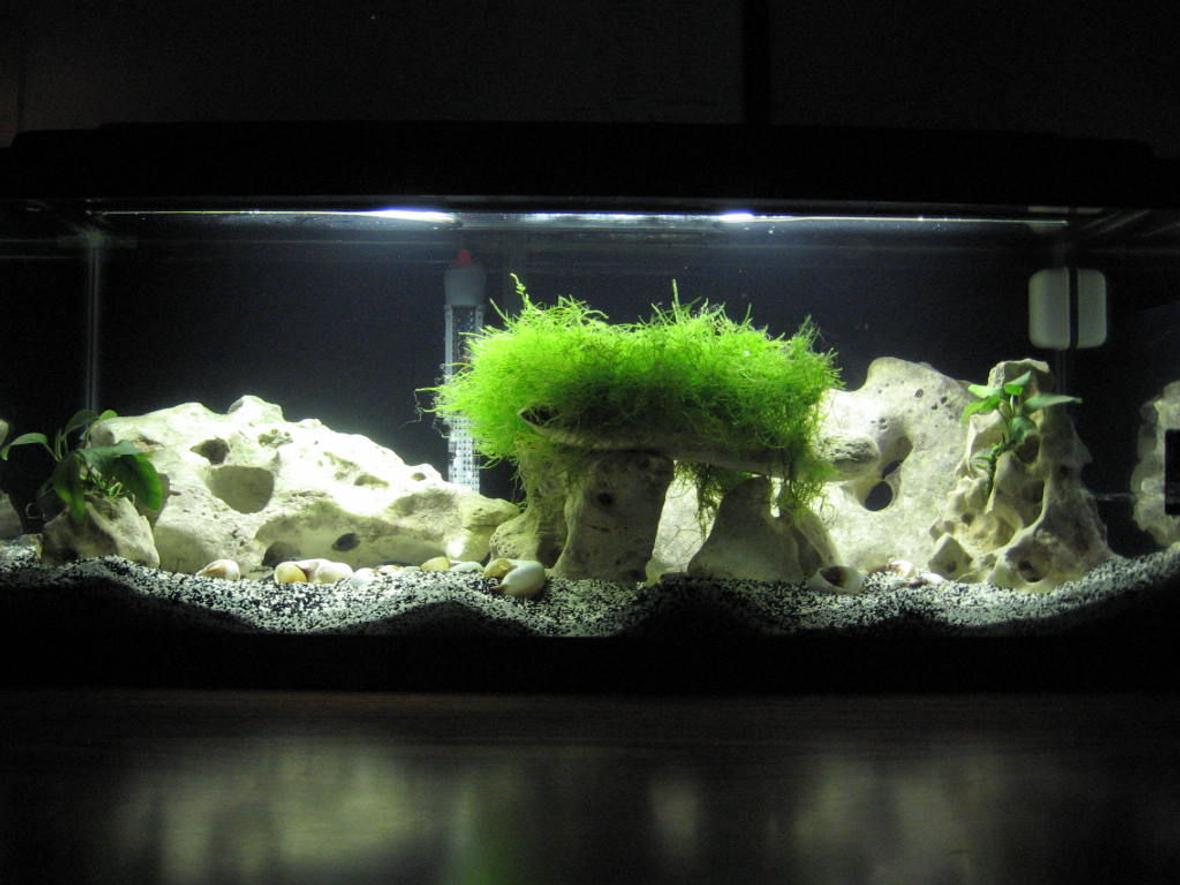
Tank: Marineland 20G long fishtank
Lighting: Perfecto hood with flourescent lighting, 12hrs on/12 hrs off
Filtration: Aquaclear 50 H.O.T (hang on tank) filter
Heater: Marinleland 100W heater
Substrate: 40 lbs Carib Sea Ecco-Complete Live Freshwater African Cichlid Sand
Decor: 30 lbs Texas Holy Rock,
Around 18 "breeding/habitat" shells
Feeding: New Life Spectrum Cichlid Formula, 1mm sinking pellets, small feedings 3-4 times daily.
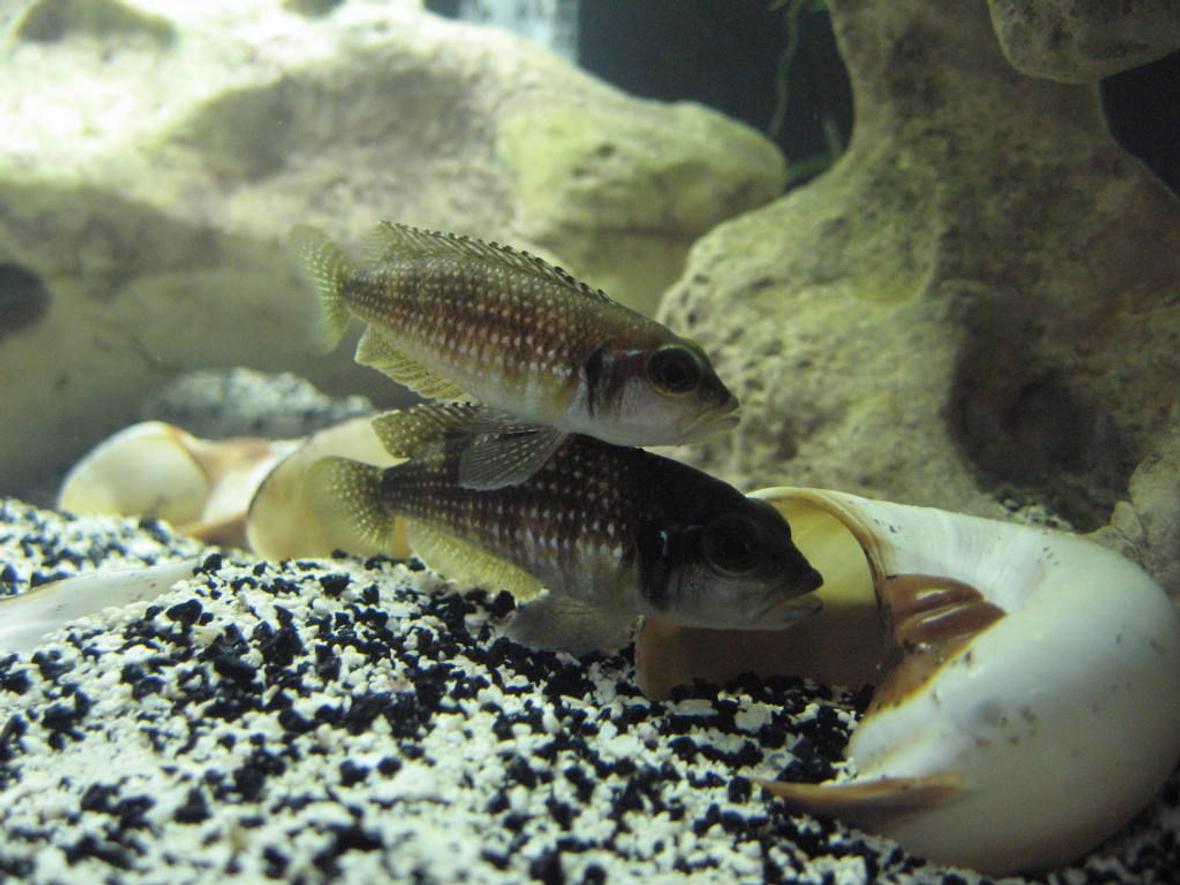
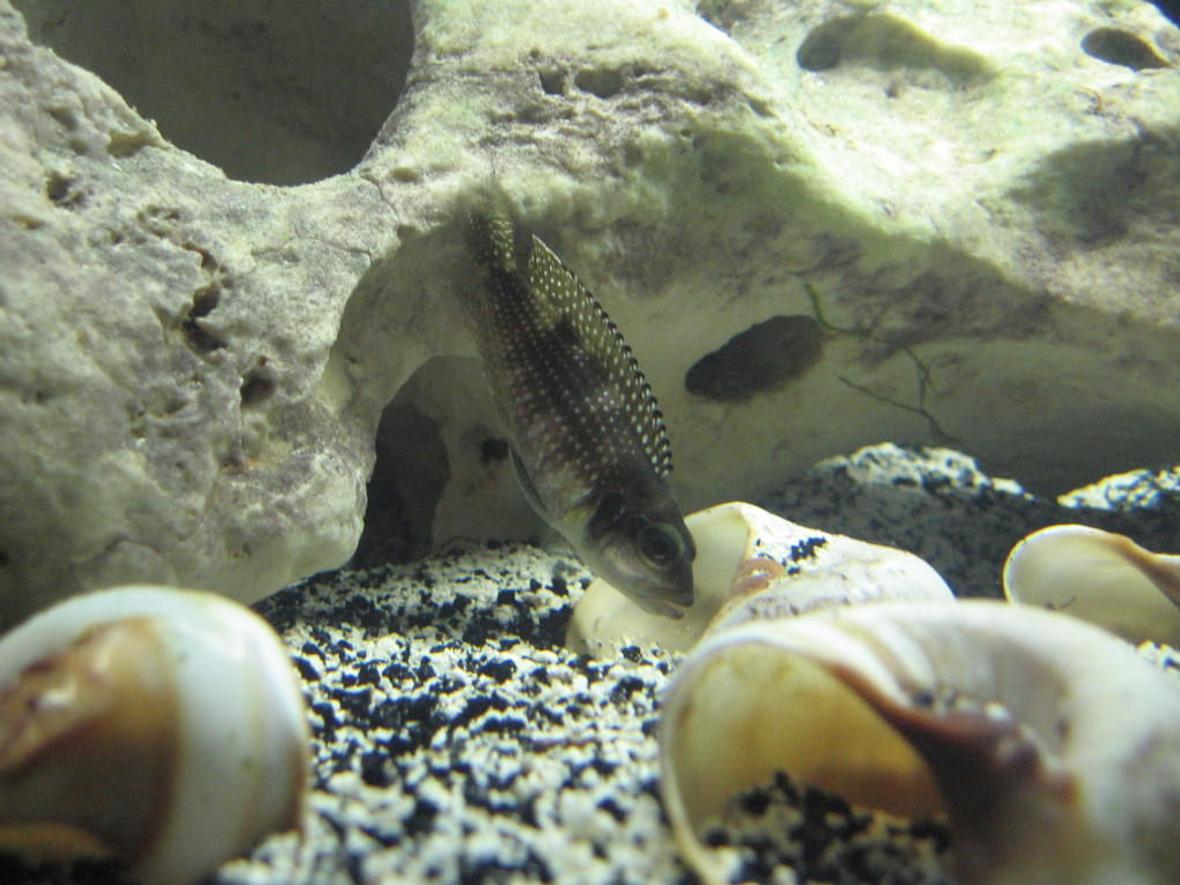
After falling in love with the Lamprologus stappersi (pearly occellatus) while browsing a cichlid forum profile database, I decided to set up a tank dedicated solely to these small Lake Tanganyika shell dwelling species. Although not the prettiest of fishes, when compared to other cichlids I chose them based on their "aggressive" looking stature, excavating lifestyle, and somewhat uniqueness to the hobby. The tank has been up and running since October of 2009, I started with 6 fish shipped from Dave's Rare Aquarium Fish of Texas, although 1 did not survive the the trip the other 5 have not only thrived, but have gone on to produce several batches of fry, I currently have 8 fish in this tank. I would recommend this species to anyone who would like to keep a smaller "species" only tank as they can be quite aggressive when it comes to defending thier territories.
Advice:
Research, Patience, Cleanliness.
Fish Kept:
8 Lamprologus stappersi (pearly ocellatus)
Corals/Plants:
2 small Anubias
1 bunch Java fern
Tank Size:
20 gallons
Quote:
"Love many, trust few...always paddle your own canoe!"
About Yourself:
I am a 33 year old male from Southern Indiana, I live with my wife, our 4 cats, and 3 fish tanks. I do machining work for a living
MOST RECENT ARTICLES

Hardcore aquascaping is where aquarium keeping meets geology, architecture, and natural ecosystem design.

Fish may not bark, chirp, or meow, but they communicate constantly through movement, posture, swimming patterns, coloration, and social behavior.

Wabi Kusa has become one of the most creative and relaxing trends in the aquarium hobby, blending aquascaping, terrarium design, and nature-inspired artistry into a compact living display.
COMMENTS